Understanding Ohm: The Foundation of Electrical Resistance
Electronics • Jun 26, 2026
What is Ohm?
Ohm is the unit of measurement for electrical resistance in a circuit. It quantifies how much a material hinders the flow of electric current. The higher the resistance, the fewer electrons can flow through, affecting the circuit's efficiency.
The Discovery of Ohm
The term "Ohm" is named after Georg Simon Ohm, a German physicist and mathematician who formulated Ohm's Law in 1827. His pioneering work laid the foundation for electrical engineering as we know it today. Ohm’s Law states that the current flowing through a conductor between two points is directly proportional to the voltage across the two points, provided the temperature remains constant.
Why is Resistance Important?
Understanding resistance is crucial for anyone working with electronics. It helps in designing circuits and ensuring they function correctly. Whether you are a hobbyist or a professional, knowing how resistance affects current flow can lead to better and safer projects.
Breaking Down the Concept of Resistance
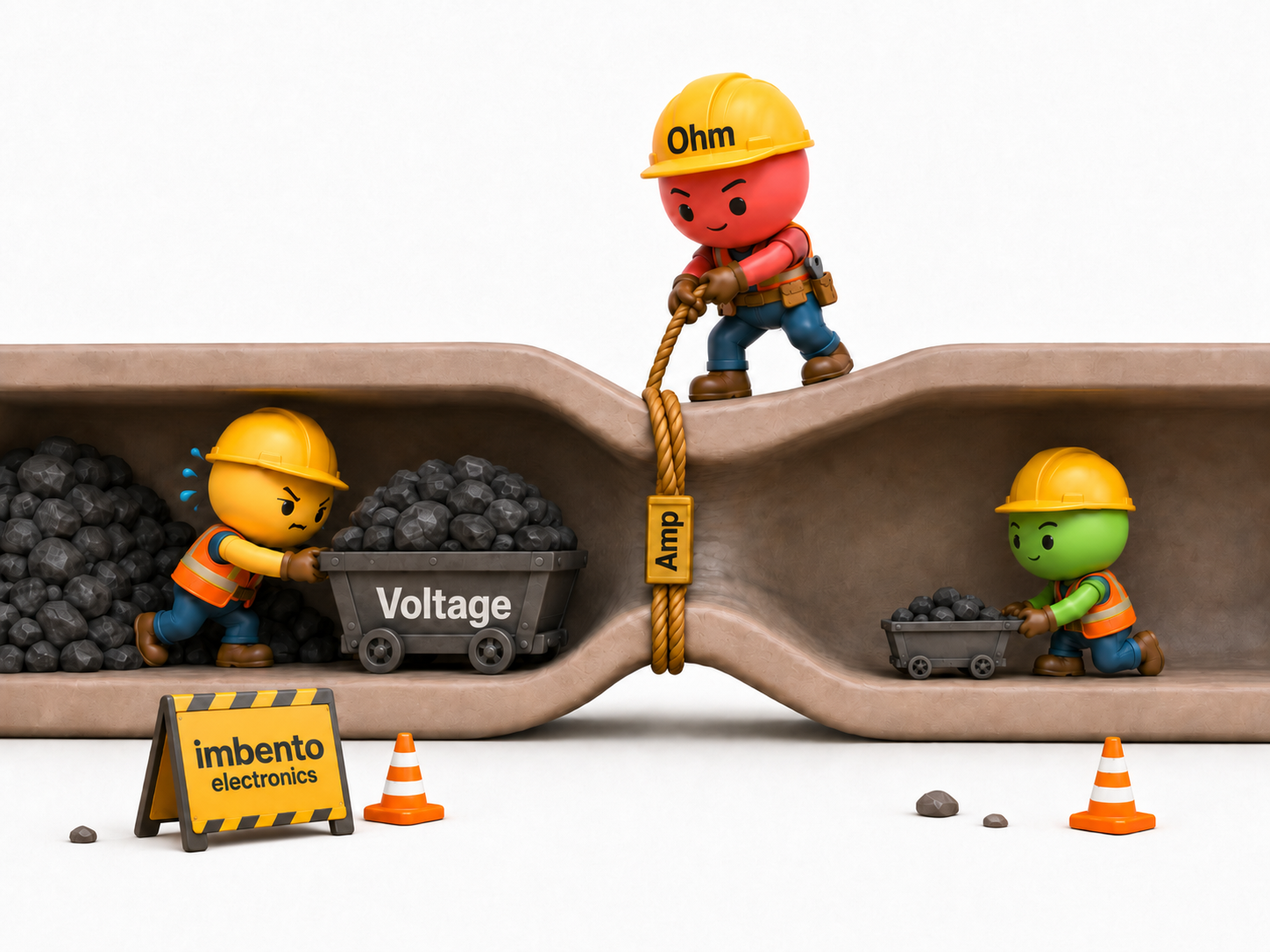
To visualize resistance, let’s use a simple analogy involving a tunnel and coal:
- Voltage: Imagine the voltage as the coal that fuels the system.
- Resistance: Consider the tunnel as an electric circuit through which electrons flow.
- Reduced Flow: In the middle of the tunnel, there exists a small opening that only allows a few coal pieces to pass through at a time, similar to how electrons move in a circuit.
This analogy illustrates that voltage (coal) tries to push through resistance (the tunnel). Just like a narrow tunnel restricts the amount of coal that can pass through, high resistance in a circuit restricts the flow of electrons, resulting in less current.
Ohm's Law Explained
Ohm's Law can be stated as:
V = I x R
Where:
- V = Voltage (in volts)
- I = Current (in amperes)
- R = Resistance (in ohms)
This equation is the key to understanding how voltage, current, and resistance interact in a circuit. If you know any two of these values, you can easily calculate the third.
Practical Applications of Resistance
Resistance plays a vital role in various electrical components:
- Resistors: Components specifically designed to create resistance in electrical circuits.
- Heating Elements: Utilize resistance to convert electrical energy into heat, as seen in electric stoves.
- Input Devices: Such as potentiometers or variable resistors, which allow users to adjust resistance and, consequently, the current.
Conclusion
Understanding Ohm and resistance is essential for anyone involved in electronics. Using the analogy of voltage as coal and resistive tunnels provides a visual and intuitive way for beginners to grasp these concepts. Whether you are building a simple circuit or launching into more advanced projects, mastering Ohm’s foundational principles will empower you to design more effective and efficient systems.
Further Learning
To deepen your understanding, consider experimenting with basic circuits using resistors and measuring current and voltage with a multimeter. Practical application of the concepts will solidify your knowledge.
Tip: Always remember to follow safety protocols when working with electrical components to avoid accidents.